
days until Swasthani Brata begins (24 December 2026). Use the schedule below to plan your daily readings — the brata runs 30 days this cycle.
What is Swasthani Brata Katha?
Swasthani Brata Katha (स्वस्थानी व्रत कथा) is Nepal\'s great month-long devotional observance, held every year from Poush Shukla Purnima to Magh Shukla Purnima. Devotees — women especially, but men can and do observe it — read or listen to one chapter of the Swasthani scripture every evening, keep a restricted diet, and worship goddess Swasthani and Lord Shiva. The 31-chapter katha weaves together stories of Shiva and Parvati, the virtuous Goma Brahmani, and the divine origin of the vrata itself. It is one of the most widely observed Hindu rituals in Nepal, second in reach only to Dashain — and the season when the Salinadi river at Sankhu draws tens of thousands of fasting pilgrims.
Daily reading schedule
| Day | Adhyaya | Date (BS) | Date (AD) | Weekday |
|---|---|---|---|---|
| 1 | Adhyaya 1 | पौष 9 | 24 Dec 2026 | Thursday |
| 2 | Adhyaya 2 | पौष 10 | 25 Dec 2026 | Friday |
| 3 | Adhyaya 3 | पौष 11 | 26 Dec 2026 | Saturday |
| 4 | Adhyaya 4 | पौष 12 | 27 Dec 2026 | Sunday |
| 5 | Adhyaya 5 | पौष 13 | 28 Dec 2026 | Monday |
| 6 | Adhyaya 6 | पौष 14 | 29 Dec 2026 | Tuesday |
| 7 | Adhyaya 7 | पौष 15 | 30 Dec 2026 | Wednesday |
| 8 | Adhyaya 8 | पौष 16 | 31 Dec 2026 | Thursday |
| 9 | Adhyaya 9 | पौष 17 | 1 Jan 2027 | Friday |
| 10 | Adhyaya 10 | पौष 18 | 2 Jan 2027 | Saturday |
| 11 | Adhyaya 11 | पौष 19 | 3 Jan 2027 | Sunday |
| 12 | Adhyaya 12 | पौष 20 | 4 Jan 2027 | Monday |
| 13 | Adhyaya 13 | पौष 21 | 5 Jan 2027 | Tuesday |
| 14 | Adhyaya 14 | पौष 22 | 6 Jan 2027 | Wednesday |
| 15 | Adhyaya 15 | पौष 23 | 7 Jan 2027 | Thursday |
| 16 | Adhyaya 16 | पौष 24 | 8 Jan 2027 | Friday |
| 17 | Adhyaya 17 | पौष 25 | 9 Jan 2027 | Saturday |
| 18 | Adhyaya 18 | पौष 26 | 10 Jan 2027 | Sunday |
| 19 | Adhyaya 19 | पौष 27 | 11 Jan 2027 | Monday |
| 20 | Adhyaya 20 | पौष 28 | 12 Jan 2027 | Tuesday |
| 21 | Adhyaya 21 | पौष 29 | 13 Jan 2027 | Wednesday |
| 22 | Adhyaya 22 | पौष 30 | 14 Jan 2027 | Thursday |
| 23 | Adhyaya 23 | माघ 1 | 15 Jan 2027 | Friday |
| 24 | Adhyaya 24 | माघ 2 | 16 Jan 2027 | Saturday |
| 25 | Adhyaya 25 | माघ 3 | 17 Jan 2027 | Sunday |
| 26 | Adhyaya 26 | माघ 4 | 18 Jan 2027 | Monday |
| 27 | Adhyaya 27 | माघ 5 | 19 Jan 2027 | Tuesday |
| 28 | Adhyaya 28 | माघ 6 | 20 Jan 2027 | Wednesday |
| 29 | Adhyaya 29 | माघ 7 | 21 Jan 2027 | Thursday |
| 30 | Adhyaya 30 (read 30–31) | माघ 8 | 22 Jan 2027 | Friday |
Vrat rules (vidhi)
- Rise before dawn and bathe — traditionally in a river or with water offered to the goddess.
- Observe one meal a day (ek buka), usually taken in the evening after puja; the meal is plain, without salt or meat.
- Read or listen to one adhyaya (chapter) of the Swasthani katha every evening — 31 chapters in total.
- Wear clean, simple clothing; many devotees wear white and sleep on a mat or the floor.
- Offer sandalwood, flowers and a small food offering each day to goddess Swasthani.
- On the final day (Magh Purnima), complete the katha, offer satabij (a hundred offerings) and break the fast with a full meal.
The katha — story in short
- Girija Katha: Parvati is born to the mountain king Himavan; through tapasya and devotion she wins Shiva as her husband — the marriage and the birth of their son Kumar (Kartikeya) form the opening arc.
- Goma Brahmani Katha: the virtuous wife Goma keeps the Swasthani vrata at the Salinadi river, praying for her husband\'s recovery — the origin story of how mortals first received this brata.
- Navaraj & Chandrawati Katha: the tale of a pious prince and his queen — pride, separation, and reunion through the goddess\'s grace.
- Swasthani Mahatmya: the closing chapters explain the goddess\'s power and the rewards of keeping the vrata faithfully.
Salinadi and Sankhu
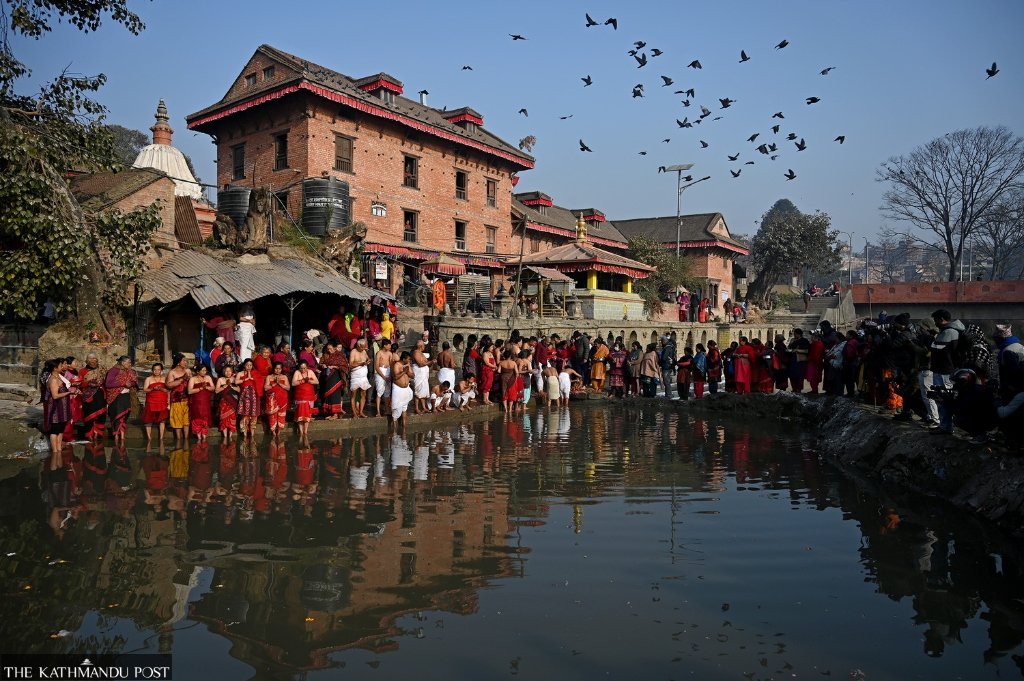
Devotees gather at the Salinadi river, Sankhu. Photo: The Kathmandu Post.
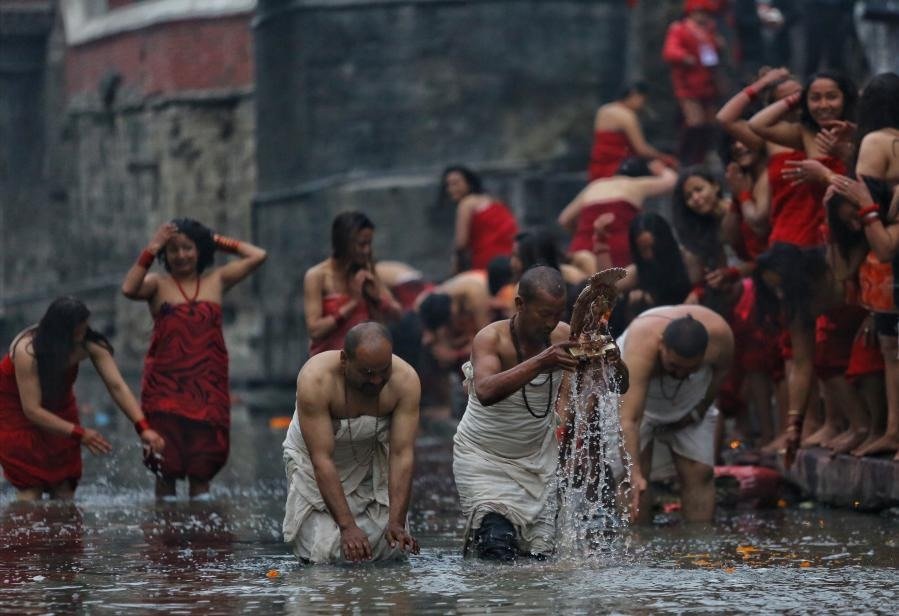
Men and women in vrata whites and reds take the holy dip.
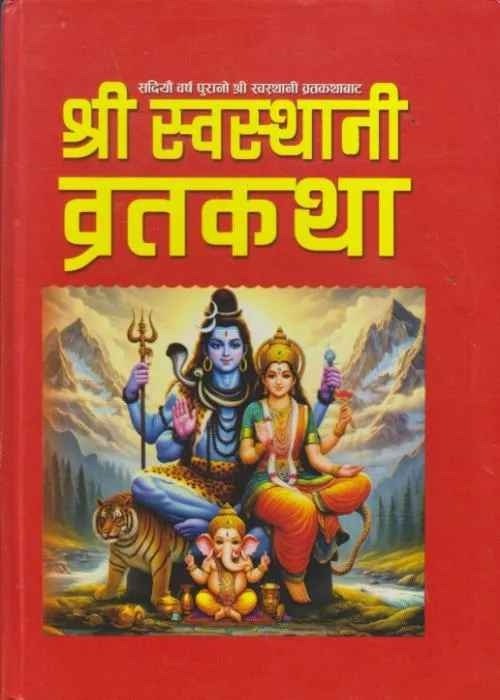
The Shri Swasthani Brata Katha — the scripture read one chapter each evening.
The most famous Swasthani pilgrimage is the Salinadi river at Sankhu, northeast of Kathmandu — the spot where Goma is said to have observed her fast. During the month the town transforms: thousands of devotees camp along the riverbanks, bathe at dawn, and the last bathing day draws crowds rivaling any festival. For devotees abroad, the vrata is kept at home — one chapter read each evening, often over video calls with family, or together at a local mandir.
Frequently asked questions
When does Swasthani Brata 2026 start and end?
This cycle runs 24 December 2026 to 22 January 2027 — Poush Purnima (पौष 9, 2083 BS) to Magh Purnima (माघ 8, 2083 BS), 30 days.
Can men observe the Swasthani vrata?
Yes. The vrata is most commonly kept by women — often unmarried women praying for a good husband and married women for family wellbeing — but the scripture itself makes no restriction, and men increasingly observe it too.
What can you eat during the fast?
Traditionally one plain meal a day after the evening puja — rice, vegetables and fruit, with no salt, no meat and no onion-garlic. Many modern devotees keep a lighter version: a vegetarian diet with the daily reading. The level of strictness is a family and priest decision.
How many chapters are in the Swasthani katha?
31 adhyayas — one for each day of a full lunar month. When the cycle is shorter (as this year, 30 days), the final day\'s reading covers the last chapters together so the katha still finishes on Magh Purnima.
What happens on the last day?
On Magh Purnima the devotee finishes the final chapter, offers satabij — a hundred units of offerings (flowers, sandalwood paste, food) distributed among family — takes a final holy bath, and breaks the fast with a full meal. At Sankhu, the last Salinadi bathing day is a massive gathering.
Where can I observe it in Australia?
Mostly at home with the daily reading — many families follow a Panditji on video call or YouTube. For a guided vrata or puja, reach a Nepali pandit near you; katha readings are also held at Nepali temples across Australia.
Keep exploring
Nepali patro · Australia Nepali patro · Festival countdown · Nepali wishes · All festivals